



Chargement de Liste Blanche…
Chargement de Liste Blanche…
Comet StormÉphémèreÉphémères
 CMC 2
CMC 2 (Vous pouvez payer supplémentaire autant de fois que vous le souhaitez au moment où vous lancez ce sort.)
Choisissez n'importe quelle cible, puis choisissez une autre cible pour chaque fois que ce sort a été kické. L'Orage de comètes inflige X blessures à chacune d'elles. (You may pay an additional any number of times as you cast this spell.)
Choose any target, then choose another target for each time this spell was kicked. Comet Storm deals X damage to each of them.
(Vous pouvez payer supplémentaire autant de fois que vous le souhaitez au moment où vous lancez ce sort.)
Choisissez n'importe quelle cible, puis choisissez une autre cible pour chaque fois que ce sort a été kické. L'Orage de comètes inflige X blessures à chacune d'elles. (You may pay an additional any number of times as you cast this spell.)
Choose any target, then choose another target for each time this spell was kicked. Comet Storm deals X damage to each of them.✦ IA Premium · Vendre ou garder ?
Croise prix sur 90j, signaux B&R/reprints, popularité EDHREC. Cache 24h.
0 commentaire de la communauté.
Connectez-vous pour écrire un commentaire.
Aucun commentaire pour le moment. Soyez le premier.
Statut officiel de la carte dans chaque format compétitif Magic. Source : Wizards of the Coast (mis à jour à chaque annonce B&R).
| Standard | Hors format |
| Pioneer | Hors format |
| Modern | Légal |
| Legacy | Légal |
| Vintage | Légal |
| Commander | Légal |
| Duel Commander | Légal |
| Pauper | Hors format |
| Premodern | Hors format |
| Old School 93/94 | Hors format |
Clarifications officielles de Wizards of the Coast. La traduction FR ci-dessous est générée automatiquement (IA) — l'original anglais reste la source de vérité.
08 novembre 2024 · source : wotc
The kicker ability doesn't let you pay a kicker cost more than once.
08 novembre 2024 · source : wotc
If you copy a kicked spell on the stack, the copy is also kicked. If the copied spell is a permanent spell, the token the copy of that spell becomes when it enters is also kicked.
08 novembre 2024 · source : wotc
If a card or token enters as a copy of a permanent, the new permanent isn't kicked, even if the original was.
08 novembre 2024 · source : wotc
If you put a permanent with a kicker ability onto the battlefield without casting it, you can't kick it.
08 novembre 2024 · source : wotc
If a spell's kicker cost was paid, the spell is "kicked."
08 novembre 2024 · source : wotc
To determine a spell's total cost, start with the mana cost (or an alternative cost if another card's effect allows you to pay one instead), add any cost increases (such as kicker), then apply any cost reductions. The spell's mana value remains unchanged, no matter what the total cost to cast it was.
01 mars 2010 · source : wotc
As long as any of its targets are legal at the time Comet Storm resolves, Comet Storm will deal X damage to each of those legal targets.
01 mars 2010 · source : wotc
The number of targets you choose for Comet Storm is one more than the number of times it's kicked. First you declare how many times you're going to kick the spell (at the same time you declare the value of X), then you choose the targets accordingly, then you pay the costs. No player can respond between the time you declare how many times you'll kick the spell and the time you choose the targets.
Statut officiel de la carte dans chaque format compétitif Magic. Source : Wizards of the Coast (mis à jour à chaque annonce B&R).
| Standard | Hors format |
| Pioneer | Hors format |
| Modern | Légal |
| Legacy | Légal |
| Vintage | Légal |
| Commander | Légal |
| Duel Commander | Légal |
| Pauper | Hors format |
| Premodern | Hors format |
| Old School 93/94 | Hors format |
Clarifications officielles de Wizards of the Coast. La traduction FR ci-dessous est générée automatiquement (IA) — l'original anglais reste la source de vérité.
08 novembre 2024 · source : wotc
The kicker ability doesn't let you pay a kicker cost more than once.
08 novembre 2024 · source : wotc
If you copy a kicked spell on the stack, the copy is also kicked. If the copied spell is a permanent spell, the token the copy of that spell becomes when it enters is also kicked.
08 novembre 2024 · source : wotc
If a card or token enters as a copy of a permanent, the new permanent isn't kicked, even if the original was.
08 novembre 2024 · source : wotc
If you put a permanent with a kicker ability onto the battlefield without casting it, you can't kick it.
08 novembre 2024 · source : wotc
If a spell's kicker cost was paid, the spell is "kicked."
08 novembre 2024 · source : wotc
To determine a spell's total cost, start with the mana cost (or an alternative cost if another card's effect allows you to pay one instead), add any cost increases (such as kicker), then apply any cost reductions. The spell's mana value remains unchanged, no matter what the total cost to cast it was.
01 mars 2010 · source : wotc
As long as any of its targets are legal at the time Comet Storm resolves, Comet Storm will deal X damage to each of those legal targets.
01 mars 2010 · source : wotc
The number of targets you choose for Comet Storm is one more than the number of times it's kicked. First you declare how many times you're going to kick the spell (at the same time you declare the value of X), then you choose the targets accordingly, then you pay the costs. No player can respond between the time you declare how many times you'll kick the spell and the time you choose the targets.
Éphémère
Top 8 decks qui jouent cette carte en tournoi (source : MTGTOP8).
Fire Lord Azula
cEDH · Abdulrahman Alromaihi · Bracket 3 Commander Tournament @ Art of Cardz (Doha, Qatar) · 14/08/26
Vivi Ornitier
cEDH · Emeric Doucet · Finale championnat @ Salle de la mairie (Malicorne, France) · 12/07/26
Mizzix of the Izmagnus
cEDH · Hunter · Party On The Deck Larks Commander @ Bismarck Larks Baseball (Bismarck, ND) · 12/07/26
Sami, Wildcat Captain
cEDH · Yvan Tapales · B3 Commander Party @ The Hobbyts (?, ?) · 04/07/26
Mizzix of the Izmagnus
cEDH · Jauhar Khan · June GG Commander Clash @ The Gnarly Griffin (Pietermaritzburg, South Africa) · 26/06/26
Fire Lord Azula
cEDH · Tyler Frable · Bracket 3 Commander Tournament @ Mana & Mochas (Palmerton, PA) · 13/06/26
Vivi Ornitier
cEDH · Oriol Perez · Commander Bracket 3//300� @ Hamelin Games (Matar�, Spain) · 13/06/26
Fire Lord Azula
cEDH · Juanma · Commander Casual @ Magic Barcelona (Barcelona) · 05/06/26
Top 8 decks qui jouent cette carte en tournoi (source : MTGTOP8).
Fire Lord Azula
cEDH · Abdulrahman Alromaihi · Bracket 3 Commander Tournament @ Art of Cardz (Doha, Qatar) · 14/08/26
Vivi Ornitier
cEDH · Emeric Doucet · Finale championnat @ Salle de la mairie (Malicorne, France) · 12/07/26
Mizzix of the Izmagnus
cEDH · Hunter · Party On The Deck Larks Commander @ Bismarck Larks Baseball (Bismarck, ND) · 12/07/26
Sami, Wildcat Captain
cEDH · Yvan Tapales · B3 Commander Party @ The Hobbyts (?, ?) · 04/07/26
Mizzix of the Izmagnus
cEDH · Jauhar Khan · June GG Commander Clash @ The Gnarly Griffin (Pietermaritzburg, South Africa) · 26/06/26
Fire Lord Azula
cEDH · Tyler Frable · Bracket 3 Commander Tournament @ Mana & Mochas (Palmerton, PA) · 13/06/26
Vivi Ornitier
cEDH · Oriol Perez · Commander Bracket 3//300� @ Hamelin Games (Matar�, Spain) · 13/06/26
Fire Lord Azula
cEDH · Juanma · Commander Casual @ Magic Barcelona (Barcelona) · 05/06/26
Scryfall (partenariat officiel Cardmarket) · snapshot quotidien
01 mars 2010 · source : wotc
Each target you choose must be different.
01 mars 2010 · source : wotc
Each target you choose must be different.
01 mars 2010 · source : wotc
For example, if you want Comet Storm to deal 4 damage to each of three different targets, that means X is 4 and you're kicking the spell twice. You'll pay a mana cost of {4}{R}{R}, plus a kicker cost of {1}, plus another kicker cost of {1}, for a total of {6}{R}{R}.
01 mars 2010 · source : wotc
For example, if you want Comet Storm to deal 4 damage to each of three different targets, that means X is 4 and you're kicking the spell twice. You'll pay a mana cost of {4}{R}{R}, plus a kicker cost of {1}, plus another kicker cost of {1}, for a total of {6}{R}{R}.
Cliquez pour voir une autre édition · liste textuelle en haut de page
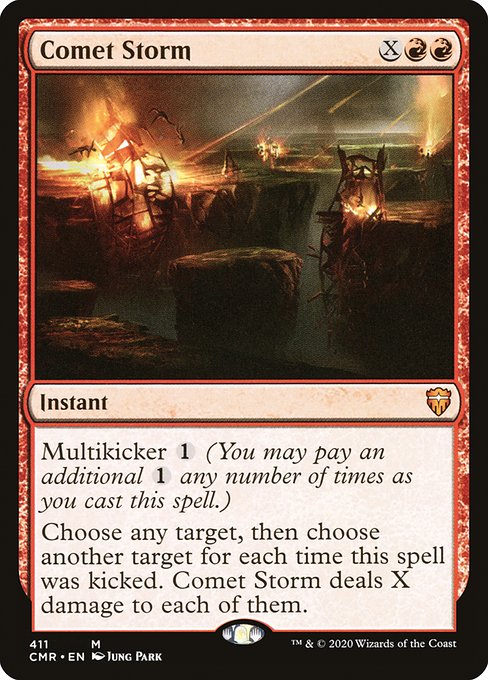
Commander Legends
cmr #4112020
1,63 €
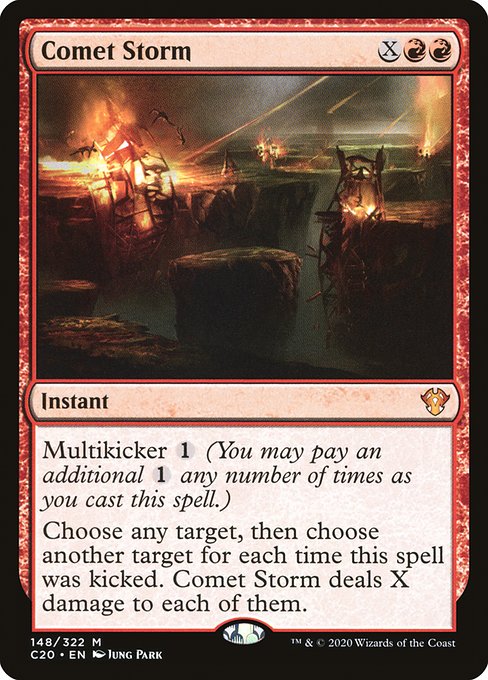
Commander 2020
c20 #1482020
1,55 €
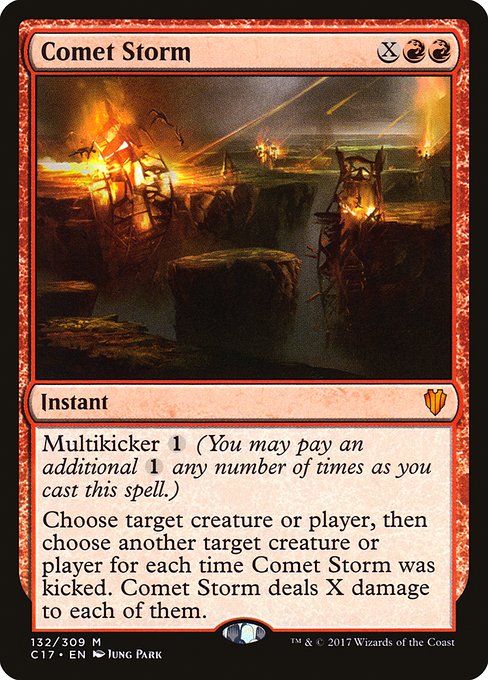
Commander 2017
c17 #1322017
1,64 €
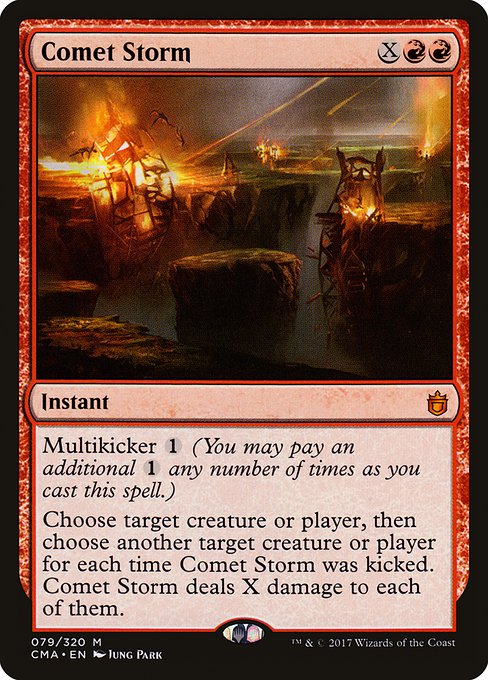
Commander Anthology
cma #792017
1,83 €
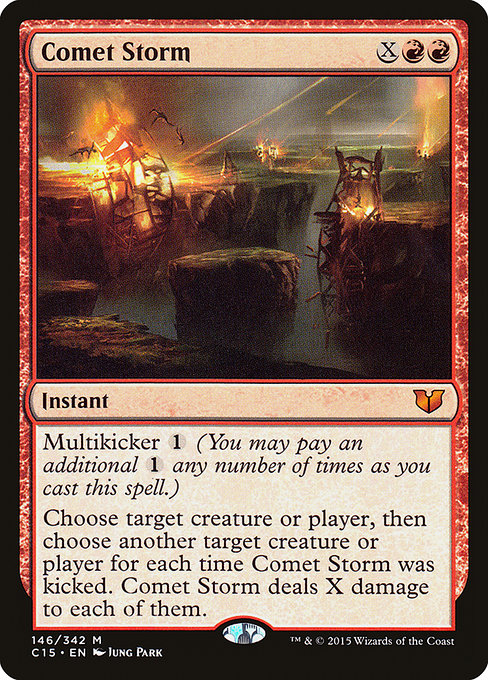
Commander 2015
c15 #1462015
1,19 €
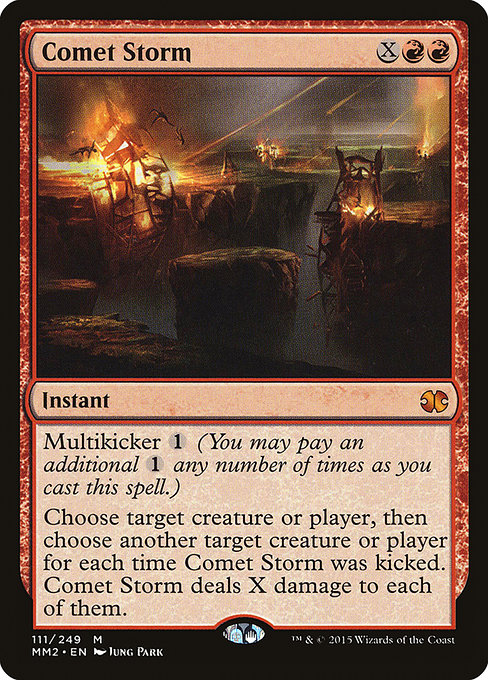
Modern Masters 2015
mm2 #1112015
1,95 €
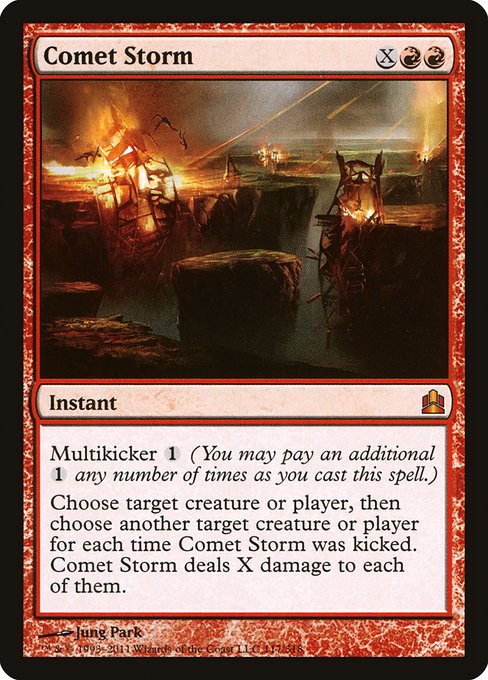
Commander 2011
cmd #1172011
1,27 €
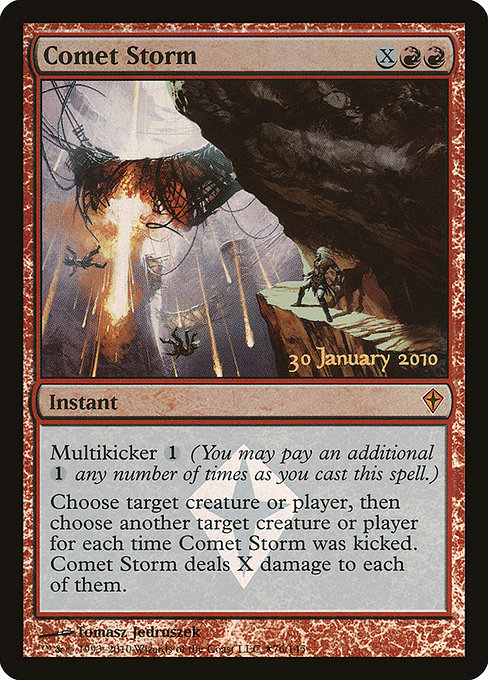 Promo
PromoWorldwake Promos
pwwk #76★2010
1,59 €
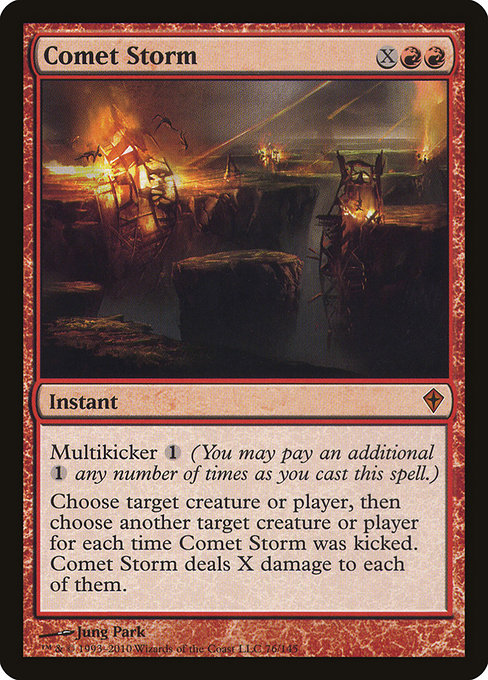
Worldwake
wwk #762010
1,77 €
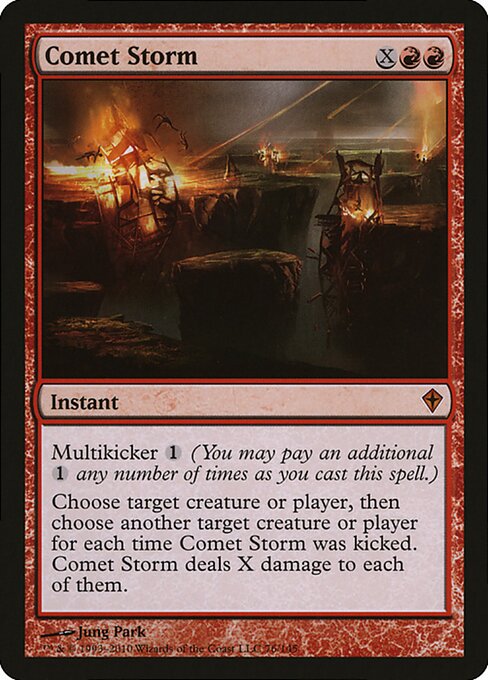 PromoActuel
Magic Player Rewards 2010
p10 #762010
0,23 €
Cliquez pour voir une autre édition · liste textuelle en haut de page
Commander Legends
cmr #4112020
1,63 €
Commander 2020
c20 #1482020
1,55 €
Commander 2017
c17 #1322017
1,64 €
Commander Anthology
cma #792017
1,83 €
Commander 2015
c15 #1462015
1,19 €
Modern Masters 2015
mm2 #1112015
1,95 €
Commander 2011
cmd #1172011
1,27 €
PromoWorldwake Promos
pwwk #76★2010
1,59 €
Worldwake
wwk #762010
1,77 €
PromoActuelMagic Player Rewards 2010
p10 #762010
0,23 €
Aucun combo référencé sur Commander Spellbook pour cette carte.
Aucun combo référencé sur Commander Spellbook pour cette carte.
Le format Commander (aussi appelé EDH) est le plus joué en France et en Europe : parties multi-joueurs en 1v1v1v1 avec un commandant légendaire et un deck singleton de 100 cartes. Voici les statistiques d'usage de cette carte dans la communauté.
Rang EDHREC
#1 446
Popularité globale
Decks référencés
64 708
Top 24 commandants
Inclusion moyenne
27 %
Sur decks éligibles
Cartes synergiques
0
Score synergie > 0
Les générals légendaires qui incluent le plus souvent cette carte dans leurs decks référencés sur EDHREC.

Seigneur du Feu Azula

Yurlok des rosse-brûlure

Hinata, Souverain de l'aube

Rowan, scion de la guerre

Roxanne, savante de la chute stellaire

Magus Lucea Kane

Kalamax, père des tempêtes

Magnus le Rouge
Cartes qui apparaissent le plus souvent dans les decks contenant celle-ci.

Tourbillon de pensée

Retour au pays

Archimage émérite
Répartition par type de carte des decks Commander qui incluent cette carte. Donne une idée de l'équilibre attendu autour d'elle.
Cartes qui jouent un rôle équivalent dans les decks Commander : utile pour comparer les options ou trouver une alternative budget.
Le format Commander (aussi appelé EDH) est le plus joué en France et en Europe : parties multi-joueurs en 1v1v1v1 avec un commandant légendaire et un deck singleton de 100 cartes. Voici les statistiques d'usage de cette carte dans la communauté.
Rang EDHREC
#1 446
Popularité globale
Decks référencés
64 708
Top 24 commandants
Inclusion moyenne
27 %
Sur decks éligibles
Cartes synergiques
0
Score synergie > 0
Les générals légendaires qui incluent le plus souvent cette carte dans leurs decks référencés sur EDHREC.
Seigneur du Feu Azula
Yurlok des rosse-brûlure
Hinata, Souverain de l'aube
Rowan, scion de la guerre
Roxanne, savante de la chute stellaire
Magus Lucea Kane
Kalamax, père des tempêtes
Magnus le Rouge
Cartes qui apparaissent le plus souvent dans les decks contenant celle-ci.
Tourbillon de pensée
Retour au pays
Archimage émérite
Répartition par type de carte des decks Commander qui incluent cette carte. Donne une idée de l'équilibre attendu autour d'elle.
Cartes qui jouent un rôle équivalent dans les decks Commander : utile pour comparer les options ou trouver une alternative budget.

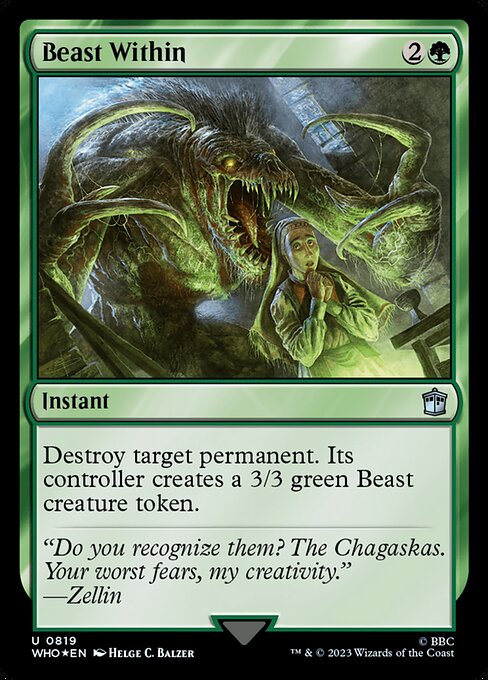
Réveiller la bête

Ignoble hiérarche

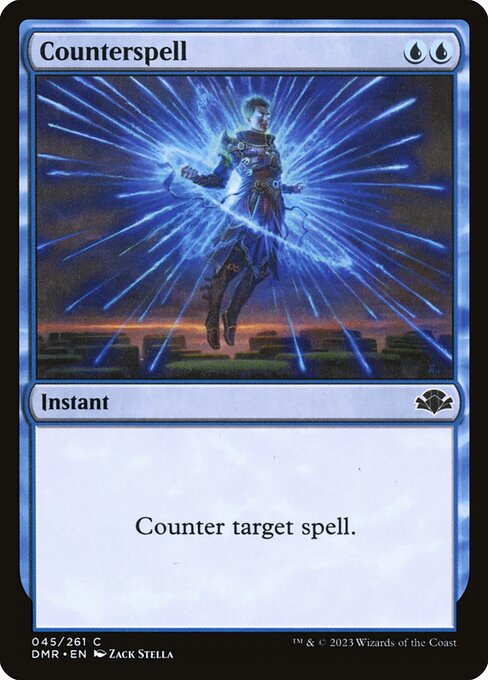
Contresort

Recherche effrénée

Culture
Réveiller la bête
Ignoble hiérarche
Contresort
Recherche effrénée
Culture